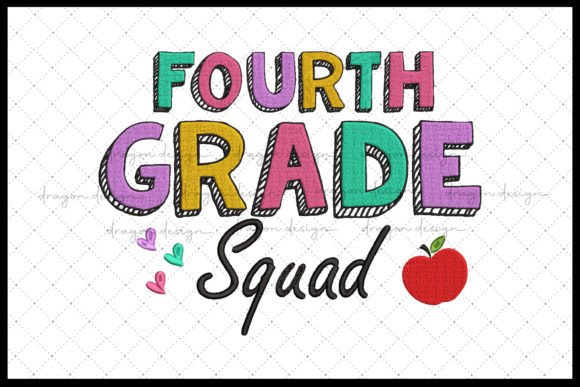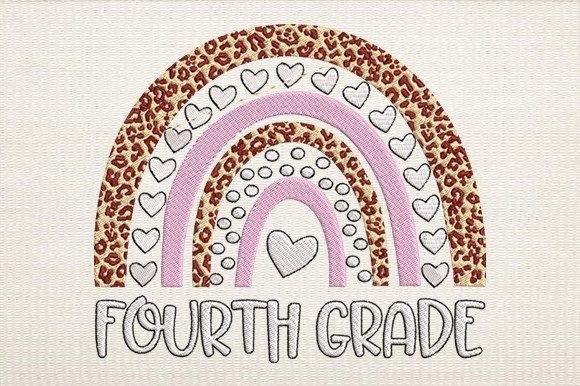
Fourth Grade Teacher Rainbow Review
As an experienced embroidery designer who has spent years crafting assets for small business owners, I approach every new digital file with a critical eye. When evaluating Fourth Grade Teacher Rainbow, I am not just looking at the visual appeal; I am assessing its viability as a commercial asset. The product description promises that this design will make your creations look "out of this world" and serve as an adorable accent on clothes or home decor. But does it hold up under the pressure of real-world production? Can it elevate a brand's identity or simply sit as a decorative element? In this review, I will dissect how this machine embroidery design functions within the context of branded merchandise, staff uniforms, and handmade product lines.
First Impressions: Visual Personality and Brand Alignment
The title Fourth Grade Teacher Rainbow immediately suggests a specific emotional tone. It feels playful, welcoming, and distinctly educational. For a boutique selling school supplies, a creative studio offering workshops, or a teacher supply shop, this design aligns perfectly with a friendly, modern aesthetic. However, when we strip away the marketing fluff and look at the core concept, we see a design intended to be bold yet soft. It is not a stark, corporate logo; rather, it is a handmade product accent that invites connection.
In the world of brand identity, color psychology plays a massive role. A rainbow motif implies diversity, joy, and creativity. If you are running a pet brand that wants to appear fun, or a bakery that wants to signal warmth to customers, this design offers a strong visual hook. It strikes a balance between professional and whimsical, which is often the sweet spot for small business merch. It avoids being too childish while remaining approachable enough for a general audience. This versatility makes it a valuable addition to any collection of design assets.
Real-World Application in Small Business Merch
Let us move from theory to practice. Imagine a local café owner wanting to create custom aprons for their baristas. They need something that signals hospitality without being generic. Embroidering Fourth Grade Teacher Rainbow onto a heavy-duty canvas apron could work beautifully as a chest logo accent. The design would stand out against a dark uniform, provided the thread colors offer sufficient contrast. Similarly, for a florist creating tote bags for flower delivery services, this design could serve as a charming mark that customers want to carry around town, effectively turning them into walking billboards.
The potential extends beyond apparel. Consider a creative studio launching a line of branded patches. These embroidered patches can be applied to denim jackets, backpacks, or even the lids of toolboxes for trade professionals who appreciate a touch of personality. The design's "adorable accent" nature makes it ideal for product packaging accents as well. Imagine a box of handmade soaps or a bundle of craft supplies featuring a small patch of this design sewn onto the tag. It adds a layer of perceived value and care that mass-produced items lack.
For Etsy sellers and digital embroidery file buyers, this design is a versatile tool for event merch. Whether it is a Back To School fundraiser, a summer camp t-shirt run, or a graduation party favor, the theme resonates deeply with the target demographic. It transforms a standard piece of custom apparel into a keepsake. When used correctly, it enhances customer trust by showing that the business cares about details and presentation.
Strategic Placement and Limitations
While the design is promising, an experienced designer knows that not every application is suitable. There are specific scenarios where Fourth Grade Teacher Rainbow requires careful consideration. One major factor is size. If you intend to use this as a tiny pocket detail or a very small patch, the complexity of the rainbow elements might get lost. At reduced scales, fine outlines can blur, and distinct thread colors may bleed together, ruining the visual impact.
Curved surfaces present another challenge. While cap embroidery is a popular request, applying a multi-colored, potentially wide design to the front of a curved hat requires precise digitizing. If the hoop size is not large enough to accommodate the full width of the rainbow arc, the design may distort. Furthermore, textured fabrics like thick fleece or loose-weave knits can obscure the definition of the stitches. On such materials, the design might look muddy rather than crisp.
High stitch density is another technical hurdle. Designs with many color changes or dense fills require robust stabilizers to prevent puckering. If you are working with lightweight fabrics like thin cotton tees or silk blends, you must ensure the stabilizer choice matches the fabric weight. Additionally, items that undergo frequent washing, such as work shirts or aprons, demand high-quality threads to prevent fading. A rainbow design relies heavily on color vibrancy; if the red or blue threads fade quickly, the entire brand image suffers.
Essential Designer Notes for Production
Before committing to a large production run, I always recommend a rigorous testing phase. Start by creating a test run in black and white. This allows you to evaluate the composition, spacing, and stitch direction without the distraction of color. Does the shape hold up? Is there enough negative space? Once the structure is confirmed, proceed to check the thread color contrast. Ensure that the chosen colors pop against the intended fabric texture.
Inspecting the spacing is crucial for maintaining a premium look. Crowded stitches can feel cheap, while sparse areas can look unfinished. Confirm that your hoop size is appropriate for the design dimensions to avoid distortion during the stitching process. Always test on the actual fabric you plan to use, not just a scrap, because different materials react differently to tension and needle penetration. Using the proper stabilizer is non-negotiable; it is the backbone of a clean finished product.
Create a printable mockup for client approval before cutting any fabric. This step saves time and money by ensuring everyone agrees on the placement and scale. Compare the design beside other existing brand assets to ensure visual consistency. Finally, confirm the commercial licensing terms. Just because you bought the digital embroidery file does not automatically grant you the right to sell products bearing the design. Verify that your usage rights cover the specific merchandise you intend to produce.
Conclusion: A Valuable Asset for Creative Brands
Fourth Grade Teacher Rainbow offers a unique blend of playfulness and professionalism that fits well within the Back To School category and broader educational themes. For small business owners, embroidery shops, and merch creators, it provides a ready-made solution to add character to their offerings. Whether used on a tote bag design, a cap embroidery project, or as a branded product add-on, it has the potential to strengthen brand identity and boost buyer engagement.
However, success depends on execution. By adhering to best practices in commercial embroidery, selecting the right materials, and understanding the limitations of the design, you can transform this digital file into a tangible symbol of quality. When done right, the result is more than just a stitched image; it is a badge of pride for your small business and a memorable experience for your customers.